The Lambing Diaries
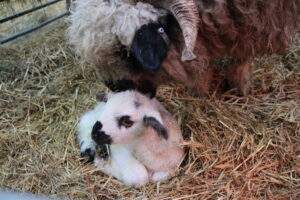
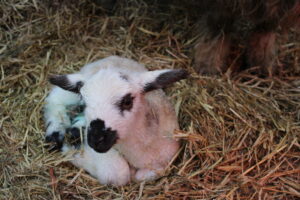
Our first two lambs have arrived!

19.11.25
If you ask any past pupil what made Ripley special, lambing season will always come up. It is a core memory that sets our school experience apart. Every year, our Ripley community loves hearing about the newest additions to the farm, and this year we are bringing you along for the journey.
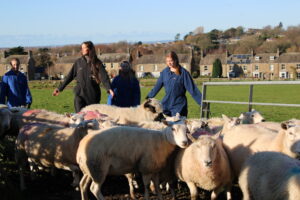
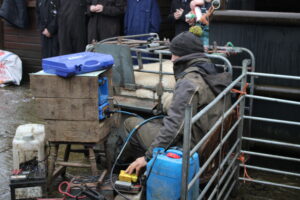
Some of the photos you see here are of last year’s lambs. They are not so little anymore! Today’s focus was weighing the current lambs to monitor their growth and carrying out health checks to make sure everything is on track.
Looking ahead to lambing season, thirteen ewes have (hopefully) been successfully tupped and are due to give birth from mid-February to early March. However, our two new Valais Blacknose ewes, Nellie and Flossie, are due in the first week of January, about ten days apart! Next week, these two will move to the smaller paddock so we can start feeding them extra rations. This helps maintain their energy levels, supports lamb growth, and boosts milk and colostrum production. Later, they will come indoors to prepare for lambing. As first-time mums, we will monitor them closely without interfering too much, especially after birth, to ensure they bond properly with their lambs.
In a few weeks, scanning will confirm which ewes are pregnant and how many lambs they are carrying. This is vital for planning feed, particularly for those expecting twins, as they are at risk of twin lamb disease caused by low energy levels. We have roughly recorded when each ewe was tupped, so we can estimate due dates. With a gestation period of around 152 days, we will soon begin bringing the ewes inside for feeding and monitoring until all have lambed.
15.12.25
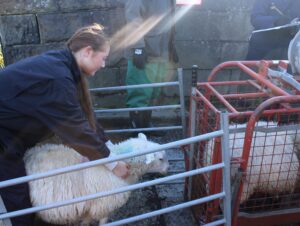
On Monday 15th December, we had our ewes scanned to check which are pregnant and how many lambs we can expect. Thirteen ewes were scanned (not including the lamb and the Valais), and the results are as follows: two ewes are carrying single lambs, nine are carrying twins, one is carrying triplets, and one ewe is empty. This gives us a lambing percentage of around 176%, which is an excellent result. Each ewe has been marked with coloured spray so we can easily identify what they are carrying. This will help us manage feeding and monitor each ewe throughout their pregnancy.
We also had our goats scanned, and their results are one single, one twin, and one empty. These are expected to give birth in late February or early March.
As for the Valais ewes, both are definitely pregnant, as expected. However, due to them being in the late stages of pregnancy, we were unable to confirm how many lambs they are carrying. Keep an eye out for their arrivals within the next two to three weeks!

03.01.26
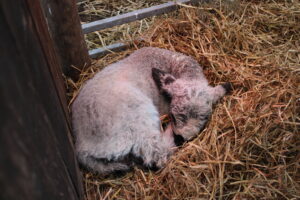
On Saturday, our first lamb of 2026 was born!
14.01.26
We are thrilled to officially announce the arrival of our first two lambs! Our Farm Technician, Josh Greene, has shared some information about the births and heart-warming updates:
“Straight after birth, we expect the ewe to clean off her lamb. This natural instinct helps stimulate the lamb to breathe and also dries it off. Before long, the lamb will attempt to stand, usually managing a few wobbly first steps. It will then try to locate the ewe’s udder and, once successful, begin to suckle.
In the first few hours of the lamb’s life, it is vital that they feed from their mum. This ensures they receive the essential colostrum needed to build up their immune system and prevents them from becoming too cold or weak. No antibodies are passed to the lamb before birth, so this first feed is crucial. We then monitor how well the lambs are feeding to ensure they are bonding properly with their mum and have plenty of energy.
After birth, the lambs are moved into a smaller pen with their mothers so they can bond and stay warm. They remain in these pens for a couple of days before being given free rein of the larger pen. They will soon be ready to venture outside for a skip around.
Both lambs have bonded incredibly well with their mums and are thriving. Even as first‑time mothers, their natural instincts kicked in immediately, and they displayed all the expected behaviours.
The lambs are both boys. One was born on Saturday 3rd, and the other arrived on Monday 12th, just before pupils began their school day at 8am.”