
Ripley Women in Science
This International Day of Women and Girls in Science, we asked some of our female science staff a few questions to celebrate the moments, achievements, and inspirations that fuel their love of science.

Mrs Pinder
Head of Biology
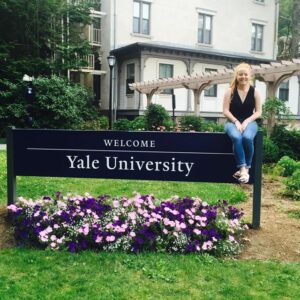 Mrs Pinder studied Biomedical Science (BSc) before completing an LLM in Medical Law and Bioethics, a path that reflects her fascination with both the science of human health and the ethical questions that surround it. One of the achievements she is most proud of is attending a summer school at Yale University, where she studied Bioethics. She describes it as “an amazing opportunity to hear from world leaders in Bioethics and study really thought‑provoking issues in medicine, like informed consent, organ transplant ethics and the advance of genetic technologies.”
When asked what she hopes her students remember about science, her answer is heartfelt: “I hope my students remember how much I cared about them enjoying Biology.”
A woman in science who inspires her is Katherine Johnson, whose mathematical brilliance powered NASA’s early space missions. Mrs Pinder admires “the power behind NASA calculations without a calculator,” a reminder of the determination and talent that shaped Johnson’s legacy.
Science continues to excite her because of the pace of discovery, especially in fields such as genetics and disease treatment. She’s particularly energised by the way new technologies are transforming medicine: “Did you know AI is contributing to developing gene therapies for conditions like blindness and sickle‑cell anaemia,” she says – a glimpse of the future that she brings into her lessons.
And if there’s one topic she could talk about endlessly, it’s the ethics of assisted dying and end‑of‑life care – a subject she’s so passionate about that she even wrote a book about it!
Mrs Otterburn
Teacher of Science
Mrs Otterburn studied Field Biology and Habitat Management (BSc Hons) before completing an MSc in Countryside Management and Species Conservation. Her career has taken her far beyond the classroom. She has worked as a National Park Ranger and in education roles with BTCV, WWT Martin Mere and The Wildlife Trusts. These experiences gave her invaluable hands‑on insight into conservation and environmental education. She explains that she loves being able to bring those real‑world stories and experiences into her teaching.
 Although her work with conservation charities has been hugely rewarding, one of her proudest achievements has been finding the confidence to set up her own businesses. She describes taking that leap as both challenging and exciting and it remains something she is very proud of.
When she looks back over her career, her fondest memories come from the people she has worked alongside. She recalls amazing individuals, some well‑known names in the field but mostly incredibly inspirational colleagues whose passion and dedication have made a lasting impression on her.
If there is one thing she hopes students remember from school, it is the wonder of photosynthesis. She still finds it astonishing that plants as large as trees can use fresh air, water, minerals from the soil and a little sunshine to build themselves. She describes it as one of the most powerful and important processes in nature and something that never stops amazing her.
The science topic she could talk about forever is Freshwater Ecology. She is happiest when she is knee‑deep in a pond or stream, searching for freshwater invertebrates and discovering the hidden life beneath the surface. She insists there is always something incredible to find.
Mrs Otterburn is also passionate about the progress being made by women in science. She reflects on how often women’s contributions have historically been overlooked, although she believes times are changing. She highlights Jennifer Doudna and Emmanuelle Charpentier, who in 2020 became the first two women to share a Nobel Prize in Chemistry without a male collaborator. Their development of CRISPR‑Cas9, a tool that allows scientists to edit DNA, is already transforming medicine. It is being used to treat sickle‑cell anaemia and to engineer climate‑resilient crops, and it may one day help cure genetic diseases.
What keeps her excited about science is the pace of environmental change. She explains that the world around us is evolving at an unprecedented rate and understanding these changes, and how we can respond to them, has never been more important. Inspiring students to be curious, informed and passionate about the natural world is what motivates her every day.
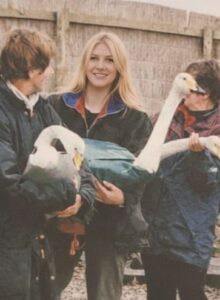
The accompanying photo shows Mrs Otterburn during her time at the Wildfowl and Wetlands Trust, collecting data on Whooper Swans. She recalls weighing, measuring and adding leg rings to individuals before releasing them back onto the reserve as part of vital research into migration, pairing, population dynamics and overall health.
Miss Turfkruyer
Lead Science Technician (Chemistry)
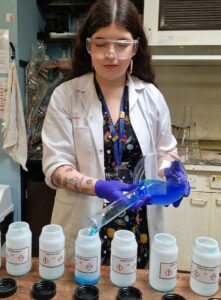 Miss Turfkruyer did not follow the university route, but she brings a strong academic background to her role, with A levels in Biology, Maths and Photography. Her journey is a reminder that there are many paths into a career in science and that passion and skill are just as valuable as formal qualifications.
One of the achievements she is most proud of is the part she plays in inspiring new generations of scientists. She explains that it makes her genuinely happy to see students enjoying an experiment she has spent a long time preparing, especially the more complex A level Chemistry practicals. Watching students engage with hands‑on science and seeing their confidence grow is one of the most rewarding aspects of her work.
A woman in science she admires is Elizabeth Garrett Anderson. She was the first woman in England to qualify as a doctor at a time when universities refused to let women sit medical exams. She later co‑founded the London School of Medicine for Women, the first medical school in Britain to train women to become doctors. Miss Tuefkruyer finds her determination and resilience deeply inspiring.
When asked what she hopes students remember about science, her message is clear. She wants young people to know that there are so many different ways to be a scientist and that science is for everyone, no matter who they are or how they identify. She believes strongly in the importance of inclusivity and representation within the scientific community.
What keeps her excited about science is the fact that our understanding of the world is constantly evolving. She loves that there is always more to learn and discover and that science never stands still. This sense of continual progress is what fuels her enthusiasm every day.
Mrs McCulloch
Physics Technician
Mrs McCulloch is our Physics Technician, a role that places her at the heart of practical science in school. Her academic background is in Sport and Exercise Science, which she studied at undergraduate level, followed by a master’s degree in Clinical Exercise Physiology. This combination reflects her fascination with how the human body performs, adapts and responds to physical challenge.
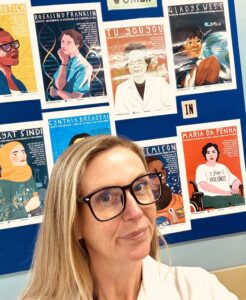 One of her proudest achievements is presenting her undergraduate thesis at the British Association of Sport and Exercise Sciences Student Conference. Sharing her research with experts and fellow students was a moment that confirmed her passion for scientific inquiry and the value of her work.
When she thinks back on her scientific journey, it is not a single moment that stands out but a feeling. She explains that she loves seeing people achieve things they once thought were unattainable or too difficult. Watching others reach their goals never fails to make her smile.
A woman in science she admires deeply is Françoise Barré‑Sinoussi. Françoise and her team discovered the retrovirus HIV in the early 1980s, a breakthrough that led to one of the most important medical advances of the last fifty years. Her work, and her continued advocacy, earned her the Nobel Prize for Physiology or Medicine in 2008. Mrs McCulloch finds her determination and impact profoundly inspiring.
When asked what she hopes students remember about science, her message is clear. She encourages them never to be afraid to ask questions. Science does not come easily to everyone and she believes that if a topic feels difficult, asking questions is the key to breaking it down. She hopes that by doing so, students will one day be able to support someone else, which in turn strengthens their own understanding.
What keeps her excited about science is simple. Research. The constant search for new knowledge and the thrill of discovering something that was not known before continue to motivate her.
The topic she could talk about endlessly is the science of sport and exercise. It is an area where physiology, performance and human potential meet, and it remains her favourite subject to explore and discuss.