Holocaust Survivor Webcast
On Thursday 22 January, year 12 History students gathered in The Hive to attend a webcast with Holocaust survivor Paul Sved and his son, Richard Sved.

Wednesday 23 January – Miss M Richardson
The webcast took place just days before Holocaust Memorial Day on 27 January and reflected this year’s theme, Bridging Generations. The theme emphasises active remembrance, encouraging people to engage with the past in ways that inspire meaningful action today. It also stresses our shared responsibility to carry memory forward through children, grandchildren, and wider society. A key concern is the fading of memory, reminding us that stories can become distant if they are not actively preserved. Above all, the theme aims to promote an educational focus, urging us to listen to survivors, learn from their experiences, and ensure their voices continue to guide future generations. Hosted by the Holocaust Educational Trust, survivor Paul Sved and his son, Richard Sved, sat down to discuss lived experiences and the impact of the Holocaust across generations.
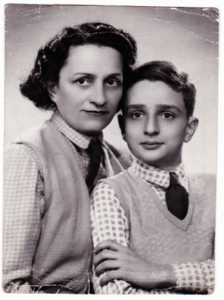 Paul, born in Budapest in 1938, was just a young boy when anti‑Jewish laws in Hungary began to affect his daily life. After his father died in 1942, he was raised by his mother, who tried to protect him as restrictions for Jewish people tightened and danger increased.
Following the German invasion in 1944, Paul and his mother were forced to wear yellow stars and eventually fled the city using false identity papers. A slip‑up nearly exposed them, forcing them to hide in a cellar before finding temporary safety in a Swiss‑protected house. During this period, Paul’s uncle was killed in a bombing raid, a loss that deeply affected the family.
They survived the harsh winter of 1944 in a cottage outside Buda, sheltered by a non‑Jewish family as fighting and bombing intensified. After the war, they returned to Budapest and were reunited with Paul’s grandparents, who had also survived.
Life remained difficult under Hungary’s Communist government, and in 1956 Paul left the country to build a new future in Britain. He studied at Leeds University, later married, and raised a family.
It was Paul’s other son, Robert, who’s idea it was that he shared his memories of the war. Paul decided to visit his grandchildren’s school to tell his story and share his experiences. This led him to working with the Holocaust Educational Trust. Today, Paul continues to share his story to help young people understand the experiences of Jewish families during the Holocaust.
“I think it is absolutely essential, and I mean essential, that future generations are aware of what had taken place and that it should not happen again. I also very strongly feel that yes, we remember, we learn, and we draw conclusions, but we do that not with hatred, nothing other than knowledge. To learn with a smile and with optimism for the future.” – Paul Sved
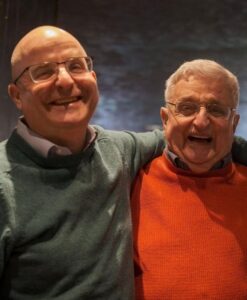 In keeping with the theme of Bridging Generations, we also heard from Paul’s son, Richard. He spoke with deep pride about being a descendant of a Holocaust survivor, paying particular tribute to his grandmother, whose extraordinary sacrifices helped protect his father, Paul, from the horrors of that period.
Richard explained that, while growing up, he often avoided engaging with the history of the Holocaust. Only in later life has he felt ready to explore that part of his family’s past, including a recent visit to Auschwitz. This experience has strengthened his commitment to supporting his father in sharing his testimony and recognising its significance. He emphasised the importance of hearing individual stories, as these personal accounts help people better understand and process what happened.
Richard also reflected that his father never lectured him about his experiences. Instead, Paul passed on the love and resilience shown by Richard’s grandmother during those dark years.
Our Year 12 Students were moved by the recounts shared by Paul. Webcasts, such as this one, are key to educating our young people about the events of the Holocaust and enriching their existing knowledge gained from the established curriculum.
Four of our year 12 History students have previously taken part in the Holocaust Educational Trust’s (HET) Lessons from Auschwitz programme, which included a one-day trip to visit Auschwitz at the end of last year. They have now completed their Next Steps project and will become ambassadors for the HET. We are incredibly thankful for the continued work of those at the HET which allows our students to to be a part of their mission to find the light in darkness and strive for a better future.
If you wish to participate in a local activity to mark Holocaust Memorial Day, please follow this link.
Learn more about the work of the Holocaust Educational Trust Here.